Zoom is such a big thing these days. It’s a word that implies close up proximity. When we are on zoom calls, our faces are front and center. Those close ups are a lot to take in!
There’s not a lot of options in those kinds of zoom situations. But in everyday life, we do have options. And one of them is zooming out.
I originally started this blog as a way to share perspective. The wide angle is the lens which pulls in context and dials out details. Whether it’s the meetings, or the news, or social media, context is missing in so much of what we see and hear today.
Switching out our lens can give us the break we need when life gets overwhelming.
IT GIVES A CHANCE TO REFOCUS
When we are zoomed in, we can only see that “one thing.” It is usually something we wish could be different, something often out of our control. When we step back and see it against a backdrop of many other things, we see more clearly. When I stand in my garden beds, I see the weeds. But when I stand on my deck, that weed goes out of focus pretty quickly and I can see the beauty of the whole yard. Life is always always about more than one thing, even if the one thing is consuming all our attention.
IT GIVES US A CHANCE TO REFRAME
When we are zoomed in, we often see only one side of a story. If we just had a relational challenge, we can be upset with the other person for any number of reasons, often attributing motives we assume are there. But if we step back, we can see other possible scenarios. We can give the benefit of the doubt. We can make it not about us. We can set it aside and give it time. We can breathe.
IT GIVES US A CHANCE TO RETHINK
When we are zoomed in, we often see only one option. Our emotions and our ego are often wrapped up in how things affect us. But when we zoom out, we can see there are options. We only have one chance at a first reaction. If we zoom out, we can see that saying the first thing that comes to mind might feel good at the time but there are always consequences for our choices. When we have a bigger perspective, we can see how things might play out more easily. If we decide that something needs to be addressed, we will have had some time to consider how it should be handled.
Whatever we are facing, we can ask ourselves if we need to zoom out a little. Are we obsessing with details, seeing only obstacles, and/or dealing with increasing negativity? We may need a new view. It is why gratitude, meditation, and breathing exercises work. They all get us out of our small frame. They lift us above the details and offer us a chance to see a bigger picture—one with fewer weeds, lesser faults, and even diminished wrinkles.
Cheers to wide angle living and the beauty we just might see through a bigger lens.
Category: Inspiration
The Measure of a Friend
“The ultimate touchstone of friendship is to have walked with them and believed in them, and sometimes just to have accompanied them for however brief a span, on a journey impossible to accomplish alone.” David Whyte
Friendship is a word like “love.” So many varying definitions of the word. Maybe we should have different words for the concept of friendship as we journey through life.
Friendship in our younger years usually includes us figuring out our identity. We are attracted to the type of person we want to be like.
We typically see our friends every day in our younger years. Emotions can run high and life is so very complicated when we are in those stages of life. Many variables come into play with our friends–insecurity, jealousy, and drama are often words describing friendship at this stage.
But as we get older, we have a better understanding of who we are. We don’t so much need friends to help us become our true selves. We don’t so much want to be “improved” as we want to be connected.
Recently I was talking with a friend about the support we give each other. The more secure versions of ourselves can hold things for others without judgment or expectation of anything in return. There was a time when we would react and judge choices that we didn’t agree with. We would maybe even exclude people from our circle because of such choices.
But true friendship coaxes our narratives into the light.
They could be about marriage, parenting, addictions, depression, shame, doubt. Sometimes there’s deep philosophical questions about God and faith and life and hope. And so we hold those things for each other so the heaviness gets distributed a little.
True friendship is able to do that. Perhaps the measure of a friend is the number of things we are able to hold for one another. What a privilege it is to have a circle of “carriers,” those who recognize that while we can’t fix each other, we can stand next to those we love and carry the cares and burdens that are too heavy to carry alone.
Whether we have one or many, what a privilege to have someone willing to help us carry the heavy things. Our shoulders–and our hearts–are truly grateful.
Batting 1000

I went to a Mariners game this weekend and saw that none of the players’ batting averages were over 300. It’s tough to get much over that in the world of baseball. One successful “at bat” out of three is a pretty darn good average.
Here’s the good news for those of us breathing today. We are all batting 1000. We have made it through every single “at bat” we have ever had. Every single day, even the hard ones.
And the older we are, the more hard ones we have likely had. We have lost people we have loved, opportunities we have hoped for, things we have valued. We’ve had hard days because of failures, rejections, betrayals, abuse, and health. We’ve also had days that just felt overwhelmingly difficult, for a whole bunch of reasons.
Looking back, there were days I wasn’t sure I would get through. When loved ones died, it felt impossible to keep breathing. When betrayal hit, it felt like loneliness would win the day. When spiritual abuse occurred, it felt like shattered faith could never be whole again. When rheumatoid arthritis attacked, pain and depression were the only signs on the road. I wasn’t sure about facing the days ahead.
But like all other breathing souls, I got through them. I kept facing forward, looking for some light. Maybe not actively in the moment, but deep inside I knew the light would win. It always comes to tell our darkness it can’t have the final say.
If today is a hard day, let’s remember that we have faced other hard days as well. And so far, we are batting 1000. Not a bad average for all the “at bats” we’ve had in this crazy game called life.
Beating Yesterday?
“You need to ignore what everyone else is doing and achieving. Your life is about breaking your own limits and outgrowing yourself to live your best life. Push to outdo your past, not other people.”
I just saw this on Instagram and definitely agree with most of it. Paying attention to what everyone else is doing only serves to make us feel insecure. Or superior. Both of which are unhealthy.
But as we take the focus off other people, do we turn our attention to beating past versions of ourselves? As we grow older, we have so many versions of that person. We have the past version that was 24 hours ago. And the one that was 24 years ago. As we get older, we can forget the yesterday we can still see and remember the yesterday we can’t.
When I was in my worst days with rheumatoid arthritis, I didn’t remember that yesterday I didn’t so much as go for a walk, but I clearly remembered the double workouts from my 20s. I remembered the marathon I completed, the weights I lifted, the mountains I climbed. Beating yesterday can be overwhelming if those are the yesterdays we are trying to beat.
A while back I decided that instead of “beating yesterday” I would “befriend today.” Beating implies a competition while befriending suggests an alliance. When we befriend today, we enter into an amicable relationship with the day. We are able to show up and do what is best for our bodies where we are at now. Not where we were yesterday.
Being our best can’t just mean doing more than we did yesterday. Befriending today could be walking for an hour, meditating for 10 minutes, making a nice dinner, stretching, lifting some light weights. Or it could mean sitting outside with some tea and a good book. If I show up, fully present, and do what is best for my body today, I win.
All of us have yesterdays filled with both accomplishments and regret. They are valuable teachers, but poor monuments. Whether it is the yesterday we can see or the one that reminds us of who we were, today’s victories can be sweeter than yesterday’s accomplishments.
The best way to beat yesterday? Befriend today. It’s been my best ally and greatest treasure.
Listening: Acquiring Wisdom and Gaining Wonder
“Deep listening is an act of surrender. We risk being changed by what we hear.” – Valarie Kaur, activist, lawyer, author
The hardest part of listening is letting go of our need to speak. If we can stop and pay attention to our mind’s propensity to formulate thoughts, we may just be able to hear what someone else is saying.
In listening closely to someone, we risk not being able to tell the other all the things we think, feel, and believe. But the potential for gain includes a perspective that could change the way we see, a perspective that just might help us acquire some wisdom and a little bit of wonder.
In this time of almost unfathomable opportunity for communication, perhaps we can take an honest inventory of the imbalance we may have between our speaking and listening skills.
Social media points to an overabundance in our ability to express and a dearth in our ability to listen. There is a time and place to lay out clearly formulated and well thought out ideas, but let’s be honest. Most of the time, we just want to get our opinion out there.
We all come to our beliefs and opinions through this thing called life. And the road each of us has walked doesn’t look like anyone else’s journey, no matter how similar it may look.
Are we soft enough, humble enough, to be changed by the story of another? We don’t need to change our core beliefs, but we can change our understanding of another’s pain. We open our minds to a side we have never considered. We surrender that almost obsessive impulse to insert our opinions into a conversation.
Every time we read a book, we agree to listen without interrupting. What if we took some of the discipline required to read into our conversations?
Just maybe we will be able to gain some wisdom. And see the wonder inside another human spirit.
The more I wonder, the more I love.
Alice Walker, The Color Purple
Prismatic Perspectives
One of my greatest joys as a teacher was teaching a Logic course to 8th graders. That age group just loves to argue. They are quick to find fallacies and invalid conclusions, especially when they are someone else’s!
If I were teaching today, I would introduce a new fallacy called the “I don’t understand how” fallacy. The more you are aware of it, the more you hear it.
I was listening to an interview with a public figure who was talking about one of the presidential candidates. “I don’t understand how anyone could have voted for someone who…(a number of reasons). I have friends who voted for him and I don’t understand how that’s possible.”
It’s as if our lack of understanding is proof that someone is wrong. If something is beyond our ability to believe, then anyone who believes that is wrong.
Most fallacies oversimplify another’s point of view by assigning it the worst possible motive. Instead of saying “I don’t understand how” and leaving it there, maybe we should be saying “I want to understand how.” The public figure who couldn’t understand how his friends voted for a candidate could have asked. I have kind, thoughtful, and compassionate friends who voted both parties.
Their reasons are as complex as they are. They are standing in different places, and they see different “colors.” We have prismatic perspectives. The light we see is reflected differently and our perspectives will be different as well.
I really don’t care about opinions on facebook and twitter. But if people I care about have different perspectives, I want to be able to understand them. I don’t want to ever assume the worst possible motive. It’s really ridiculous to argue a conclusion. It is important to understand how people reach conclusions, and often, it takes time to peel back emotions and get to reasons.
It would be nice to actually argue the issues involved, which would involve supported premises and conclusions that follow. But until then, maybe we could at least remember that even if we can only see one color of the prism, there are at least six others that may just as “true.”
Maybe it’s easier just to say, “I don’t understand how…”
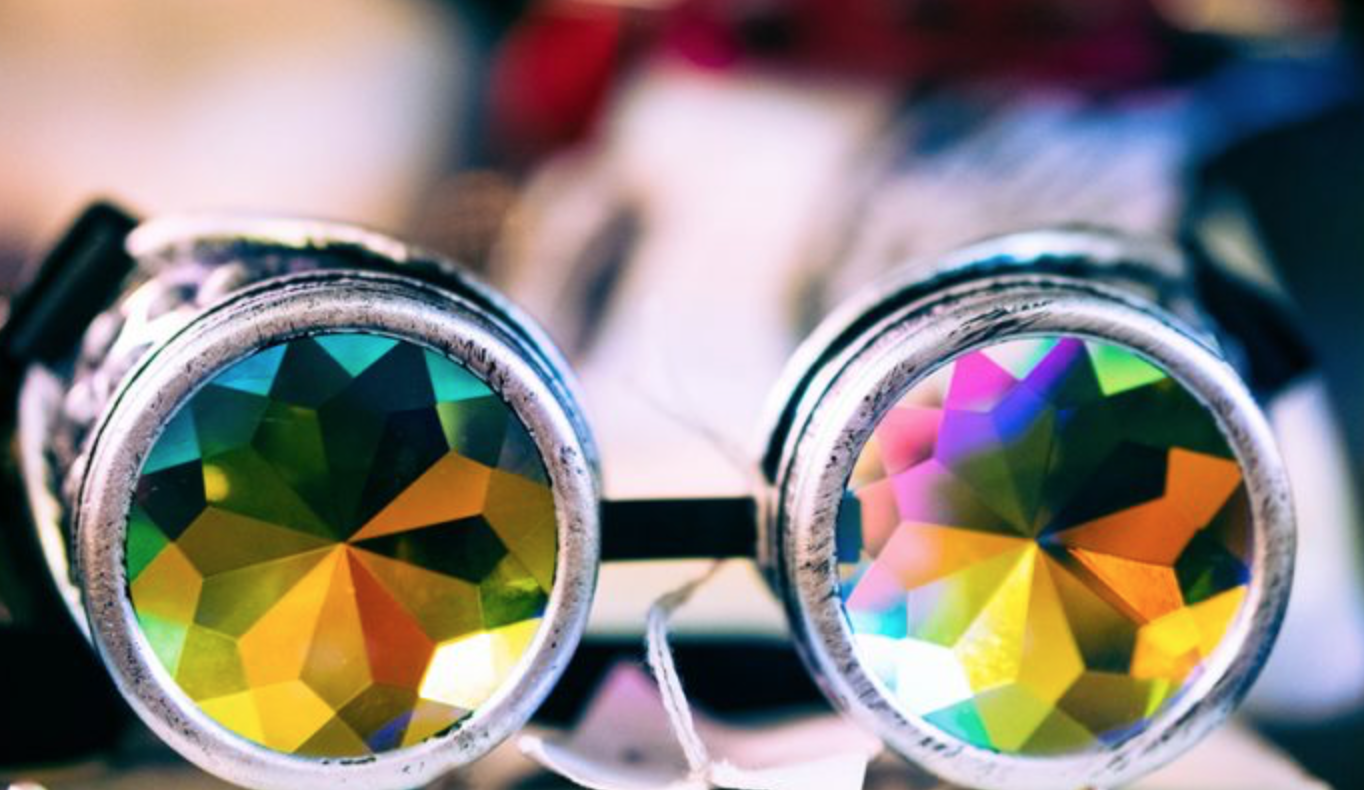
Switch Out the Lens
It only takes a moment to change perspective. Sitting on the plane, we see the tarmac and the gates and the baggage handlers. In minutes, we see the entire city and the lake, mountains and bridges. I love how things becomes smaller as my picture becomes bigger.
If only we could climb in an airplane every time we needed to see differently. There are days the tarmac is all I can see. Or the dreary rainy days that declare the sun has left town. Maybe permanently.
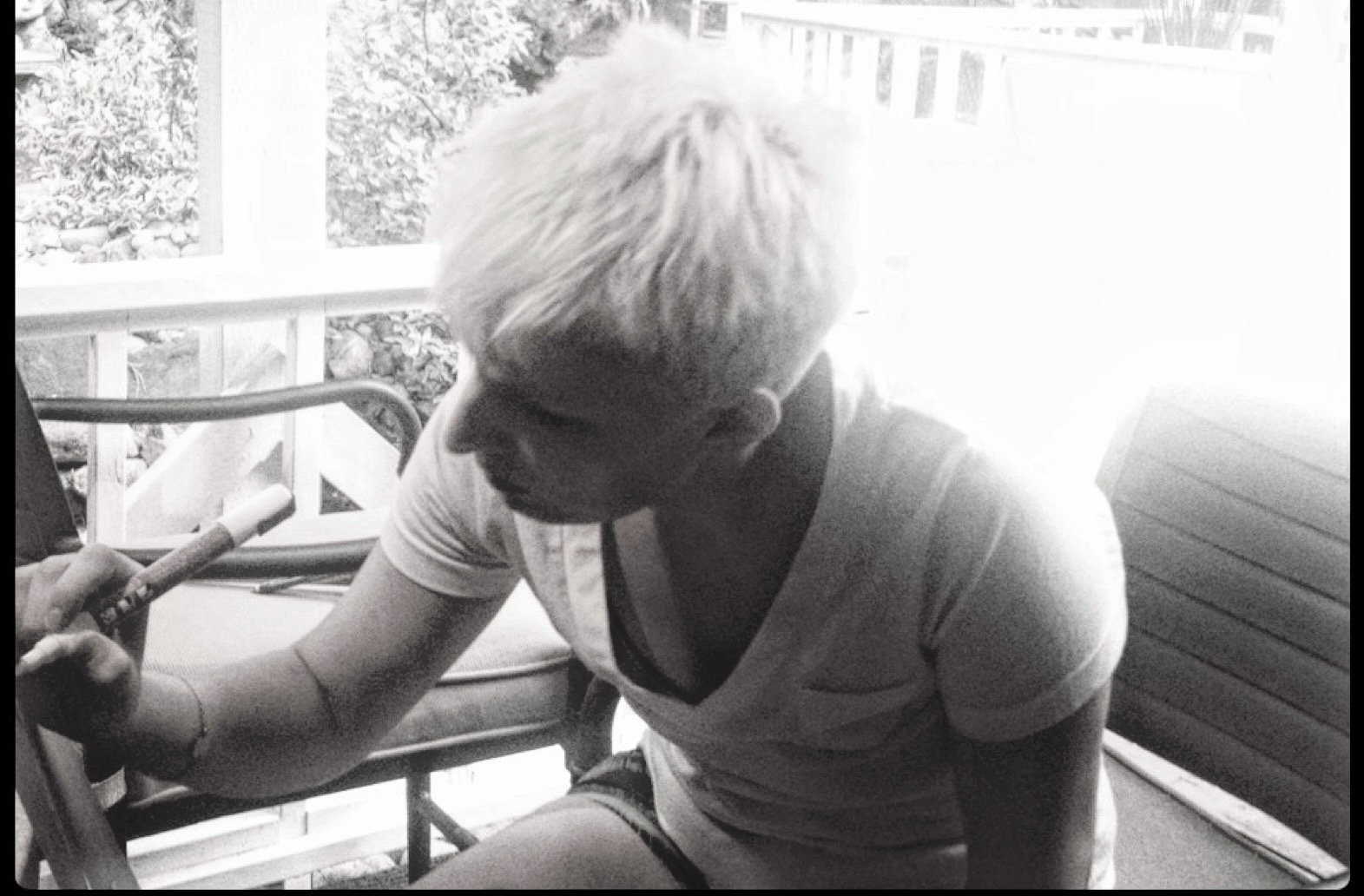
One day while out with my daughter, she took a picture of me at a coffee shop. When I looked at the picture, I laughed and said, “Can you make me smaller????” It was so close up and I was larger than life. Well, not with this lens, she informed me.
And that’s how I feel when a problem seems bigger than life, taking my entire field of view. I remind myself that I can’t see differently with the lens I have on. I need the wide-angle lens, the view from up above, where everything gets perspective. Maybe we need a little of God’s perspective.
Everyday. I need to remind myself to stop being absorbed with things right in front of me. That telephoto lens is designed to make things look bigger than they really are, bigger than the grace that’s available. A couple of practices we can choose any time we are needing a different perspective:
- gratitude
- meditation
- prayer
- deep breathing
- exercise
- stepping outdoors
Maybe it’s time to switch out our lens. Getting up off the ground only takes a moment. The wide-angle lens with a bigger picture can be so much better.
“Distance lends enchantment to the view.” ― Mark Twain
For Anyone Who “Makes” Anything

For those of us who love to create, it is easy to get discouraged when we get in a slump. We look at the production line and see the belt has stopped rolling. Discouragement begins to creep in. But could it be that we are allowing quantity to be the real measure of our creative process?
This applies to so much of what we do on any given day. It could be painting, designing, writing a blog or a poem or a song, taking a photo, sharing words of hope with a friend, making a dinner, giving anything of ourselves to someone else.
This brilliant quote by poet laureate Amanda Gorman caused me to stop and think about my own discouragement. It speaks to the possible mindset behind it.
“I think if I could go back in time and give myself a message, it would be to reiterate that my value as an artist doesn’t come from how much I create. I think that mindset is yoked to capitalism. Being an artist is about how and why you touch people’s lives, even if it’s one person. Even if that’s yourself, in the process of art making.”
Amanda Gorman, Poet, NYT Arts and Leisure, 3.14.2021
Young at Heart?
Frank Sinatra immortalized the very classic “Young at Heart” back in 1953. It has become standard advice for maintaining a youthful attitude in life. But sometimes it’s helpful to look at ideas from other perspectives. The heart goes through a lot in this life.
I do everything I can to keep “young at heart” in a physical sense. But I think being “older at heart” has some advantages. People with older hearts have had a lot of practice in loving and figuring out what really matters at the end of the day.
Obviously, all ages practice this. It’s just that experience is a good teacher, and experience generally takes time. When we start out in life, it is totally about us. We are gradually trained in the concept of “other.” Share your toy with the “other” child in our home. Let the “other” go first. It’s not always an easily won battle.
But we keep practicing, getting it wrong, and learning. We have parents and teachers who help us see what it means not to be selfish, not to be mean, not to use the word “hate” when talking about others. We are learning the “art of the heart.”
My younger heart was more self focused, more judgmental, more comparative, more wrapped up in romantic feelings about love. My older heart has learned something about “sharing” and that always involves giving away something of myself.
It could mean giving physical things, but most often it means giving an ear or a shoulder or a word of encouragement. It could mean wishing them well as we let them go. It could mean forgiving someone for that thing we want to hold on to. It could mean responding the wrong way, but apologizing and trying to do better next time.
As Rod Stewart sang, “This old heart of mine, been broke a thousand times…” Older hearts have been broken over and over again. Older hearts have stitches and duct tape and band aids deep beneath the surface, each one telling a story of loss and sorrow. But broken things get made stronger as we allow the mending process to have its way.
Staying young at heart physically is as important as anything else I do, but I’m getting more comfortable with being “older at heart” in other ways. Perfectly drawn hearts don’t represent older hearts. Those have been hammered and bent and twisted into something that might not look very aesthetic, but there’s so much beauty to eyes that peer beyond appearance.
The next time we see a wrinkle on a face–be it ours or someone we love–let’s remember that something of beauty picked up and moved to the heart.
“Some people, no matter how old they get, never lose their beauty – they merely move it from their faces into their hearts.” Martin Buxbaum
When I’m Wiser and I’m Older…
I was out walking and “Wake Me Up,” by Avicii, started playing. The song is about waking up when everything is over, “when I’m wiser and I’m older…” And it got me thinking about that phrase “wiser and older.” Because simply growing older, and not wiser, would be a sad conclusion to life.
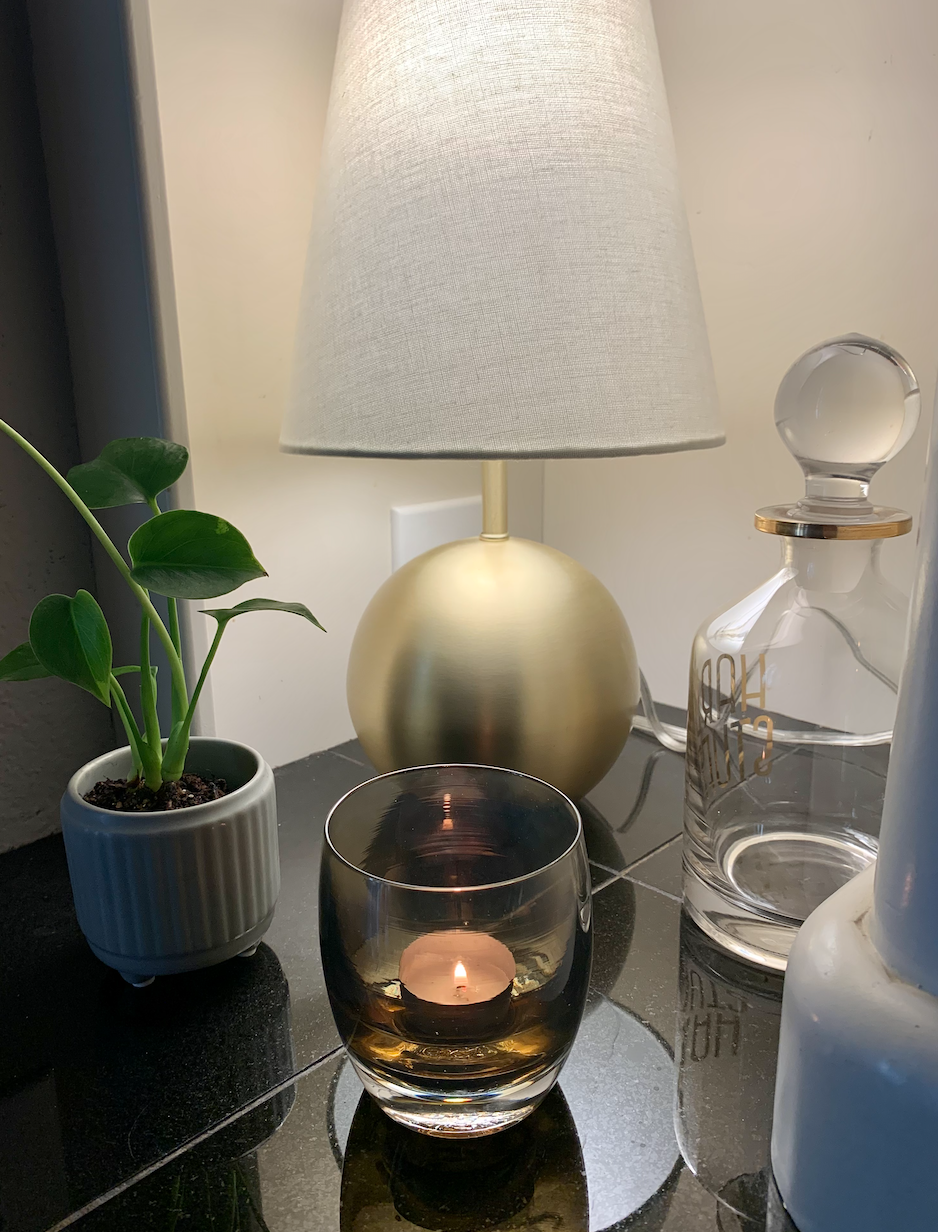
Right after that, a dear friend gave me a Glassy Baby. Those familiar with that amazing company know that each “baby” has a name, and the one she gave me was “WISE.” It seemed like wisdom was trying to get my attention.
So, I ‘ve been thinking a lot about that lately. Being wise includes having experience, knowledge, and sound judgment. But another, maybe equally important quality, is an awareness of life’s paradoxical nature and all its ambiguities.
The reason that people “down the road” a bit have more opportunity to grow in wisdom is because we most likely have had our habitual and familiar lives uprooted. We’ve had to make sense of life at other levels. “Business as usual” doesn’t work when life feels more “unusual” than anything else.
I used to live a very black and white life, which I think is indicative of younger generations. I mean, the TikTok generation has declared that side parts, skinny jeans, and the laughing emoji are out. And that’s ok. When I think back honestly, I probably would have cancelled anything that wasn’t bell bottoms and frosted white lipstick. We just didn’t have any way to cancel things back then. We perfected the eye roll.
I had so many opinions about so many things. Right and wrong, black and white. I was forming the container that would hold my life, and it had to make sense. But the funny thing is that as we grow older, life seems to makes less sense. Our minds realize that nothing is as it seems, people are complicated, and simple answers don’t often meet all life’s complexities. It’s more gray than we realized. Judgment is hard in a gray world.
The paradoxical nature of life requires that we know how to hold everything without needing to judge it all. It’s loving those wearing a side part AND those who see the middle part as the only way. Wisdom is really about our lens, and how we interpret the world. I think wisdom looks a lot like love.
“Wisdom is clearly more than intelligence, knowledge of facts, or information. Wisdom is more synthesis than analysis, more paradoxical than linear, more a dance than a march.”
Richard Rohr
Thoughts on what wisdom looks like in everyday life?