Let’s Lift

As we grow older, we are hopefully becoming stronger— physically, emotionally, and mentally. While we likely have glitches in all three, it’s possible to become stronger in big and small ways.

On I can hear everyone arguing about the aches in joints, the constant trying to remember where we put our phones, the fatigue brought on by loss and pain. 

I have the same arguments. But I’m challenging the notion that it all points to getting weaker. I think most of us would acknowledge we have made much progress in our thinking. Maybe we have set boundaries where there used to be none. Perhaps we refuse to beg for acceptance when we feel unwanted. We have learned when to say yes. And no.

Our thoughts about growing older matter and sometimes we have to push past someone else’s ideas. When I was diagnosed with osteoporosis, I was immediately prescribed medication. “You’re a female with a smaller frame. It’s inevitable.” Just the medical community’s long arm reaching for prescription drugs. Is that really the only answer?

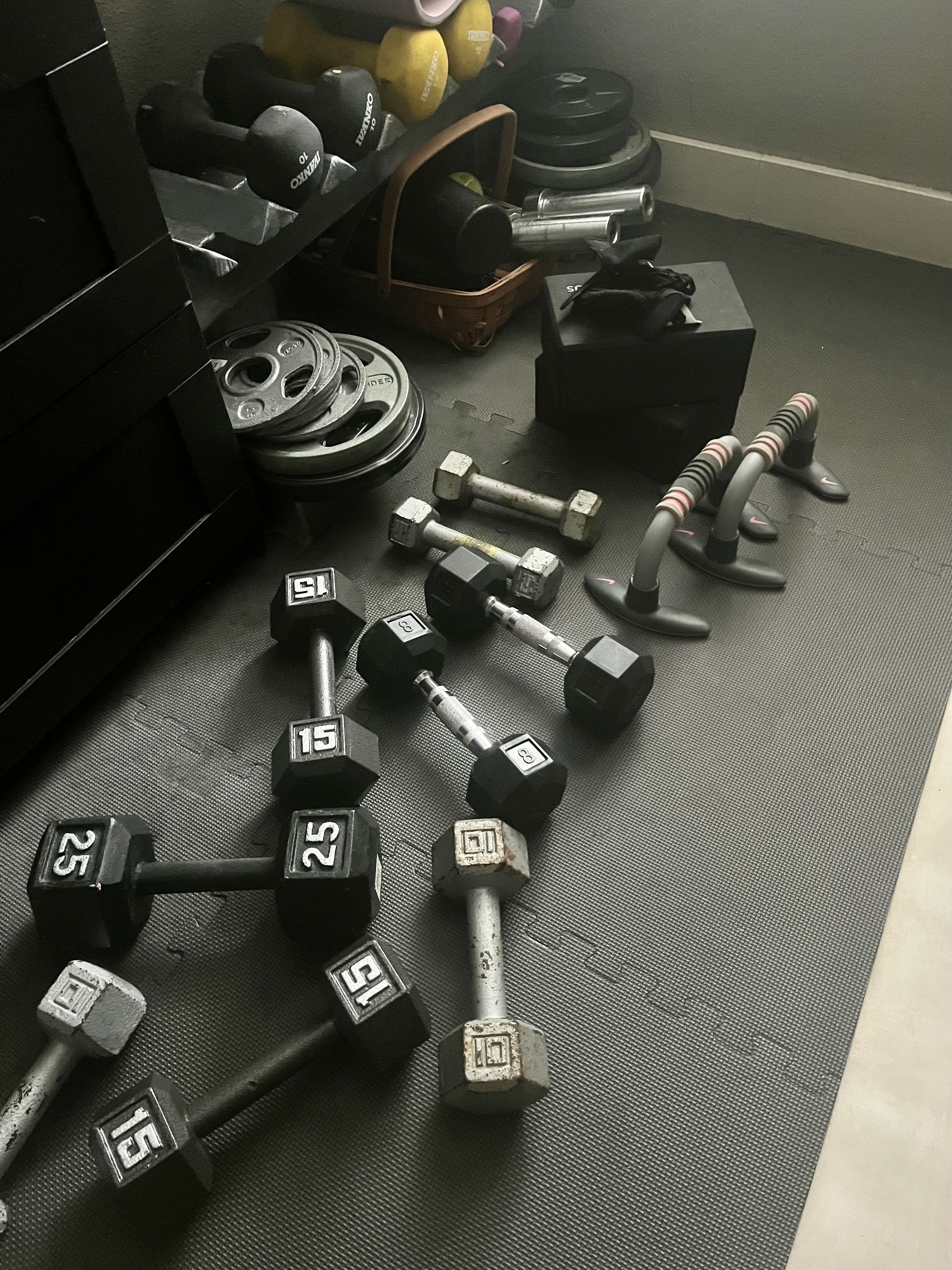
So I did some research on how to build stronger bones. “Lift heavy things” was the biggest takeaway. So I bought a couple sets of dumbbells and started lifting. While I had to start at relatively light weight, I’ve gradually been able to lift heavier. I still haven’t had another dexa scan, which I believe will show change, but even if it doesn’t and I wind up needing to consider medication, I’m not going down without a fight. I’m getting stronger in the process.

All our collective experience, especially the hard things, has brought us wisdom so we can confront challenges differently. I had previously allowed someone to treat me poorly because of their need for power. Nope. Wisdom says never again.

And there’s so many ways to learn and grow. I love finding books that challenge my thinking. Not just clicking and scrolling my way to discouragement and even despair. But intentionally choosing what crosses my eyes.

It takes little strength to lift people along the way. Just a decision to be the reason someone feels seen. It can be a smile or a kind word to someone we encounter in our day. Or reaching out to someone we know is going through a challenge. It’s asking the question: How can I get out of my own small world?

I’m older than I’ve ever been. And I’m also stronger. I made a decision to lift: lift weights, lift thoughts, lift people along the way. One tiny degree more than yesterday. Older and wiser. Older and more emotionally stable. Older and stronger.

Let’s not allow others to define our season. What we think about our aging process matters.

Lightening Our Heaviness

An author I follow recently wrote an essay detailing how she felt out of sorts. She is in her late 40s and going through things with family and kids and career. 

Her first piece of advice to herself and others was to “empty your purse” so you can look at everything that’s in there. She was carrying heavy things and they were causing the purse to “cut into her shoulders.”

The purse analogy is a good one. But I couldn’t connect with it personally. My heart had been feeling heavy too. Why couldn’t I just empty my purse like she did?

And I finally realized that heavy things are different when we are in our 40s and mid 50s. They are often things that, to some extent, can be lightened. I used to say yes to everything. And then one day “the straw that broke it all” would get thrown in. And it became too much.

So I would sit down and figure out how to lighten my life. Maybe it didn’t get perfectly lightened, but it was a touch easier and my shoulder didn’t hurt quite so much. Everything is relative that way. 

But today? I’m pretty much doing just the things I want to do. That heavy feeling still creeps in though. Sometimes it feels like every cell in my body is weight training. 

During this season, my shoulder feels ok. But my heart? That feels heavy a lot. And I think that’s generally the case as we approach our 60s and beyond. We aren’t carrying things so much as we are carrying people. Obviously we carry people in our younger years too. But as we get older, we’re not doing 100 other things as well. 

Some of the differences:

1. We don’t just have children who are young adults; we have very adult children who are out making decisions and living their lives. And there’s often grandchildren in the mix as well. They go through all the ups and downs of life, and we feel all the bumps with them. There’s just not much we can do about any of it.

2. Our circle of friends is likely smaller, but we care more deeply about each one inside it. During this season, they are going through more personally, either with their families or themselves. There’s relational issues and maybe issues with their families. They are losing family members and friends they were once close with. We know their pain and carry it with them.

3. Fear can creep in over health, and the health of people we love. Everybody is going through something. We carry it all. Because we care.

It helps to acknowledge that this season is different. Very little is being written about how life changes in our 60s and 70s. And I doubt there’s anything much about the 80s and 90s. 

Most of what’s different today can’t be changed. There’s no purse lightening activity available. The most we can do is recognize all that’s in our hearts. I have found that getting together with a friend and just sharing life helps. Often, if it is a particularly heavy time, one of us will say, “You’re carrying a LOT right now.” 

Just having our hearts “seen” by someone who knows us well helps us breathe a little deeper. Sharing our hearts, and helping someone else feel seen by sharing theirs, may help to lighten heaviness just a bit.

Because at this season as well, everything is relative that way.

The Crescent and the Moon: Seeing the Part and the Whole

As we get older, we acquire experience and, hopefully with it, we gain wisdom. We are filled up by the lives we live. But muddled in with experience and wisdom, we have loss and pain and struggle. Sometimes that causes cataracts in our vision. We long for a fresh way to see things we might already “know.”

A band I have been enjoying, Bleachers, covers a song called “Whole of the Moon.” I love the line:

“I saw the crescent; you saw the whole of the moon.” 

We usually see in part, and there’s times when someone else sees more. When we connect with someone’s writing, whether in song, prose or poetry, it’s often something that we intuitively know but didn’t have words for. Ah, that’s it! And we get to see beyond the crescent.

Creative people don’t take us to new places. They find new pathways to places and ideas we have visited before. They take us on a “scenic route.” It’s one of the reasons we need to seek out stories, poems, essays, good fiction, and new music. So often we come across something and have that “aha” moment, not because we never knew it, but because we never saw it in that way.

A fact will burst into our lives. “I never knew that,” we say when presented with a new fact. But truth unfolds. “I see that more clearly now,” we say when presented with a new perspective. Although facts can be useful, we are all really after truth. The older we get, the more we try to whittle away the superfluous.

As we read quality books, we pick up insights that the author has gained in ways we likely have never heard before. We each carry a light within us that illuminates wisdom and guides us to truth. But reading can increase that, giving us bits that make us think and process what we already know. I love when I have to stop and think about something I have just read.

Below are some books I have read this year, with a quote from each that caused me to pause. The list is not complete and some of them have multiple quotes I could have used. And there’s not the space to mention all the poems, songs, essays, and non-fiction. Maybe another time.

If any books have impacted you in some way, made you think, or simply inspired you, please mention in the comments. We can share the ways that perhaps we got a glimpse at the “whole of the moon.”

**********

Maggie Smith, You Could Make This Place Beautiful
“How I picture it: We are all nesting dolls, carrying the earlier iterations of ourselves inside. We carry the past inside us. We take ourselves—all of our selves—wherever we go.”

Gabrielle Zevin, Tomorrow, and Tomorrow, and Tomorrow
“Time travel is looking at a person, and seeing them in the present and the past, concurrently. And that mode of transport only worked with those one had known a significant time.”

Steven King, 11/22/63
“We did not ask for this room or this music. We were invited in. Therefore, because the dark surrounds us, let us turn our faces to the light. Let us endure hardship to be grateful for plenty. We have been given pain to be astounded by joy. We have been given life to deny death. We did not ask for this room or this music. But because we are here, let us dance.”

Hernan Diaz, Trust
“For I’ve come to think one is truly married only when one is more committed to one’s vows than the person they refer to.”

Ann Patchett, Tom Lake
“It’s not that I’m unaware of the suffering and the soon-to-be-more suffering in the world, it’s that I know the suffering exists beside wet grass and a bright blue sky recently scrubbed by rain. The beauty and the suffering are equally true.”

Shelby Van Pelt, Remarkably Bright Creatures
“In the vastness of the universe, each remarkably bright creature has a unique purpose and contribution.”

Khaled Hosseini, A Thousand Splendid Suns
“And yet she was leaving the world as a woman who had loved and been loved back. She was leaving it as a friend, a companion, a guardian. a mother. A person of consequence at last.”

Yaa Gyasi, Homegoing
“We believe the one who has power. He is the one who gets to write the story. So when you study history, you must ask yourself, Whose story am I missing? Whose voice was suppressed so that this voice could come forth? Once you have figured that out, you must find that story too. From there you get a clearer, yet still imperfect, picture.”

Jessica Knoll, Bright Young Women
“…women who wish to advance in their career face an insidious kind of discrimination…no response at all. It was subtle discouragement by neglect, what the author called “motivational malnutrition.”

John O’Donohue, To Bless the Space Between Us
“There is a light that shines in every heart….it is what illuminates our minds to see beauty, our desire to seek possibility, and our hearts to love life.”

I also read a number of page turners that were just fun. A few of those include First Lie Wins, Guest List, None of This is True. Because sometimes we just like a good story!

Sounds of Silence

As we get older, our lives often get quieter. Perhaps at times, even silent. What do we believe about the silence that can surround us during this season?

“Hello darkness my old friend. I’ve come to talk with you again.” Hauntingly captivating or painfully paralyzing.

When we are younger, silence is often a welcome respite. I remember, raising five children, the times that I found myself alone in my home. I wouldn’t turn on music or do anything that might disturb that glorious sound of nothing.

But today, silence is often a reminder that retreating is no longer necessary. We may even be tempted to run from it, turning on music or picking up our phones. Perhaps we need to look at the quiet and get brave enough to sit with it. The question I try to answer these days is: What is silence holding in her hands? At this season in life, silence still offers us gifts.

1. One of the most important gifts that silence offers us is the space to craft a different narrative, one that will reorient our perspective and point our minds in a more purposeful and hopeful direction. We get influenced all day long by social media, news, family, drama of all types. We can get a sense of heaviness, not realizing how we even go there. It’s good to stop, identify our thoughts, and refocus where necessary.

2. Silence also offers us space to listen to our own heart beat, a heart that we can hear be full of gratitude for another day to lead our bodies in life. We allow (and sometimes force) gratitude to have the loudest voice.

3. Finally, and possibly most important, is the space to connect with God, or Love, or whatever it is that’s bigger than us. Because if we’re the measure of all that there is, our story will consume us. It was never meant to be our yardstick for measuring joy or happiness or contentment. So we stop to breathe deeply, meditate on all that is beautiful, pray. We change perspective.

Silence allows us to hear the deep longing of our own hearts. It’s centering, painful, and hopeful all at once.

I am learning to not only accept the hauntingly captivating beauty of silence; I am learning to embrace her hallowed space. Noise often cobbles together a storyline that’s less than encouraging. Silence allows us to identify the lies we hold about ourselves, especially relative to aging, and craft a story that’s more hopeful. We need that story and so do the people we touch everyday.

“Hello darkness my old friend. I’ve come to talk with you again.” There’s a lot she has to share with us.

Stories of Connection

“Sending memes, links and videos to others isn’t trivial.
It suggests that you’re thinking of them.
It’s known as pebbling, based on penguins
gifting pebbles to potential partners.
Pebbling is an act of care. Every pebble is a bid for connection.”
~Adam Grant

I LOVE this. Connecting with someone sends a message: “You are not alone.”

Talking about his mental health struggles, Michael Phelps said that he and a few friends check in on each other all the time. “I will be going through some kind of spell, spill, spiral — whatever you want to call it — and bing, my phone lights up, a text comes through. I’m able to relax because you don’t feel alone in that moment.”

I love the physical connections with friends. There are friends that I walk with, and while the exercise is great, being with them is the best part. Then there’s the, “Let’s grab coffee,” or “You free for a glass?” Each connection happens on a different level and they are all my favorite. 

But sometimes a connection is just the expression of a thought. I read a story about two older women who share a heart emoji when they wake up just to let the other know they’re being thought of. And that they’re each still there!

Every morning I play Wordle and Quortle. A friend does the same and we share our scores with each other. While we cheer each other on for the rare great score, it’s about connection. We check in with each other, and usually can tell when the other might be having a moment.

This morning, after sharing her scores, she texted, “How are you doing? I’m around all day if you want to chat.” I am not alone this morning. Pebbling.

There is a crow that comes to my yard frequently. I make sure our little fountain has clean water. I always acknowledge him and I believe he senses my care for him. We connect and I believe he “pebbles” me too. It’s important to remember that we connect to so much around us, especially when we’re feeling alone.

So let’s not trivialize the small gestures of connection. We never know if someone is going through some kind of “spell, spill or spiral.” If I happen to send a heart emoji, here is everything that little red icon means: “I’m thinking about you. I care about how you’re doing. And I love you. I’m here if you need to chat.”

Maybe they could add a little pebble to the emoji list♥️ 

It Came to Pass

If we could peek behind the air we breathe, we could see a kind of trickery taking place. It is luring us into believing that life will always be just as it is today.

We often see the daily routineness of our day as “it came to stay.” When we’re parenting young children, when we’re in school, when we’re in a challenging season, even when all is well, we think we’ll always be doing the things we’re doing today.

But as we get older, we look back on those times and know that, truly, they never meant to stay. When did they grow up, where did all those classes go, how did I reach retirement age?

It doesn’t change simply because we get older. Even though we know better, we can still see our routines as something that will always be. We still need to be reminded to look behind the scene and spot the deception.

This past weekend was challenging in a very common way. It was cold, windy, and rainy. The forecast was more of the same for the next 10 days. I was struggling. Then I thought, 10 years from now, I would probably give anything to live this cold rainy day again at the age I am today. So I remind myself to enjoy this present life, the common everyday rainy life I have today.

May we remember that this day—with all the routine and challenge it may hold—comes to pass us by. I want to breathe it in, consume all the air my lungs can hold, and live everything in front of me. Ten years is a blip.

The screenshot of today’s speeding-past-us image may be a little blurry, but let’s get a glimpse of the beauty it holds. Even if we have to squint to see it. As Seals and Croft reminded us in the 70s, “We will never pass this way again.”

Despite all that may be going on, there is something we can appreciate. Even if it’s just with one small smile.

Harrison Butker and “That” Speech

OK, I wasn’t planning on posting this, but this site is about perspective. And maybe this offers a different perspective of the speech Harrison Butker gave.

Most everyone has an opinion about the speech he gave to a Catholic college graduating class. Anyone just going off the sound bites of this speech should read the entirety. He covers way more than women’s roles.

He suggests the graduates choose their residence based on whether the church offers a Traditional Latin Mass, admonishes Catholics for using birth control, says bishops no longer care about sacraments, and quotes Taylor Swift (oh the irony). So many controversial opinions, but that’s not my point here.

The point here is that he didn’t recognize that his audience was bigger than Catholic graduates. It appears he didn’t know or care that even though he was speaking in his own “personal capacity” as a Christian Catholic, he was also representing something much larger. He was asked to speak because he was a member of the Super Bowl winning Kansas City Chiefs. It would be arrogant for him to think he was asked to speak because he was some good Catholic.

If he took time to understand he was representing something bigger than himself, he would have thought about his words and crafted something that truly honored women and motherhood. But he also would have considered how it affected his team and his employer. In the age of social media and access to every move, public figures always have more than one audience.

Because he didn’t recognize that, he caused conflict and division for fans, players, coaches, and people without any interest in the sport at all. 

It irritates me to hear people say we shouldn’t judge because he was speaking in his “personal capacity.” It’s not about his right to speak his mind; it’s about who and what he is representing. There’s a tradeoff for making all that money by kicking a ball, Harrison. Your tradeoff is losing the privilege of “personal capacity.” You are now accountable for what you say and do based on your “public capacity.”

It’s a good reminder for all of us. We are always representing something bigger than ourselves when we speak. If we say things out of anger or judgment, can we excuse ourselves by saying, “Well that was just in my personal capacity?”

But what about how it impacts our partners, children, grandchildren, friends, coworkers, companies we work for? What we say and do impacts so many others. Most of us are not in the public spotlight, but we’re in someone’s spotlight. 

It was never just his personal capacity. I need to remember it’s not just mine either.

Friendships for Life. Or Not.

Life is hard. And complicated. Relationships so often help us navigate all that. But sometimes they are the source of that. I have had this conversation numerous times over the past months.

We all know people that were an important part of our lives.  And then small, very incremental, changes began happening. And we find ourselves no longer sharing the same experiences, feelings, or lifestyles. Very often, we become sad or confused, left wondering what went wrong with that relationship.

But the reality is that nothing really went “wrong.” Change will often break things down and put them back together again. Just not always in the same way. It’s challenging when friendships fall prey to this rearranging.

If we don’t realize that this happens to all of us, we can become resentful of the other person or left feeling guilty that we are somehow at fault for the changes. 

We’ve heard the adage, “Friends come into your life for a reason, a season, or a lifetime.” The problem arises when we think someone is a lifetime friend when things begin changing. That’s a tough one.

When life changes, and we no longer see certain friends every day like we used to, it’s natural for our lives to drift apart a little. That’s normal. Often, we will still find ways to get together, catch up, and enjoy each other. 

But then there are people who want more from us than we can give at this time. Or they relate with us from the perspective of who we once were. We often wish we could go back and pick up where we left off. But we usually can’t. The changes that have taken place dictate that’s not possible. 

It’s important to realize that it’s normal for relationships to shift. As hard as it is, we have to learn to release our expectations of what will be, without disparaging our memories of what once was.

Releasing someone we once thought would be in our lives forever, and not resenting them or feeling guilty because that has changed, is a sign of growth. We grieve the loss, express gratitude for what once was, and trust the future holds promise for the both of us. Not easy but sometimes it’s the only way to keep moving forward.

Picking Up Our Power

We often don’t believe we have any power because the idea has been hijacked by people who use their positions to force their ways. People in every sphere use words to threaten and manipulate, and we have all been affected by it. As a result, most have come to see power as evil.

But real power involves invitation. Helping someone go from despair back to hope is more powerful than any act of force or coercion. We invite people to see a new perspective, to share our hope, to see bigger.

We’ve all had times when we get blindsided by something. We have a measure of hope and things are going relatively smoothly. And then. We get hit with a challenge we didn’t see coming. We are tempted to quit all the declarations we made about staying positive. We’ve all been there.

And it’s ok. Our minds can’t process life in an instant. It takes a minute to look at the challenge squarely in the face, and let the effects of the situation sink in.

I had an example of this recently. I was praying blessings over those I love, and I was seeing the effects of it. And then one of my kids was met with some misfortune. They were rightfully upset and sad over what had happened. As moms, we feel all the pain our kids feel. I texted a friend and said, “What good does blessing do? Nothing matters.”

Knee jerk response. Of course it matters. After a little time, I came back to that. I think it’s ok to go down with people who go down. It might take a minute, but if we are going to offer them a hand back up, we’re going to have to pull ourselves back up first. 

That “hand” we offer is often words. The next day, “Thinking about you. How are you doing today?” Checking in, standing with them, processing challenges alongside them. It’s not some big lecture or advice. We let them know they are not alone, and that helps them process and heal.

Despair is always trying to crash into mental spaces, our own and those we care about. By finding a thought or two that leans away from it, we are picking our power back up. The smallest of choices helps us bring light not only into our own lives, but also into the lives of those who may feel broken. 

We fill our hands up with words of invitation. We have the power to go from “Nothing matters at all” to “It all matters.” And how we see that matters a lot.

On Taylor Swift, Writing, and Also Therapy

Taylor Swift used these words to describe why she wrote the songs on her latest album, The Tortured Poets Department. Mostly about relationships gone bad, her pain was real and her life was undone. She said she HAD to write it. 

The imagery she uses throughout her songs is haunting. “My spine split from carrying us up the hill.” After writing heart wrenching songs to describe what she went through, she declared her tears holy as she released it. And then, by her own testimony, she was free of it.

We all have that same power. As we get older, our breakup stories have become distant memories, but we all have a measure of current pain. Time after time, I turned to words on paper when struggling. Those words, that so often helped me get through, didn’t exist before I dug in and pulled them out. 

A couple years ago, I went to therapy to get past some things that were hard. I wasn’t so much looking for advice as I was needing to flesh out what I was wrestling with. Speaking the words helped. If we don’t find words to express our pain, I think it just stays inside. We might be able to ignore it and push it deep, but it doesn’t get released. Sometimes therapy can help us get that done.

Here’s the thing. Sometimes we need words for our “sad stories.” We could be facing a serious problem or just finding ourselves with something we can’t get past. Poetry, stories, talks with friends, journal scribblings, therapy, and prayer…they all help us put words to what we are going through. They all provide opportunity to get “ink on the page,” and give shape to what we’re experiencing. It helps our tears become holy.

And fortunately for us, we don’t have to release our words to millions of people as part of our healing. We can sit all alone in front of a piece of paper, no one ever seeing or hearing it. Public or private, sometimes we just “HAVE to write it.”

Grateful to the poets who put words to what they go through, so we can learn from principles that apply to all of us. Thank you Taylor for sharing your pain…your poetry is brilliant.